Western Astrology vs. Chinese BaZi: Two Paths to Self-Discovery
By Camilla · November 3, 2026
When we talk about understanding ourselves through the stars, most people in the West immediately think of their zodiac sign – Aries, Taurus, Gemini, and so on. This is Western astrology, a system that has been refined over thousands of years, primarily focused on the positions of planets in relation to the Earth at the exact moment and location of your birth. But just as there are many constellations in our sky, there are also many ways to interpret the cosmic dance, and one of the most profound and ancient is Chinese BaZi, often called the "Four Pillars of Destiny," which offers a different, yet equally rich, tapestry of self-understanding derived from the specific energy patterns of your birth moment.
The Foundations: Different Celestial Maps
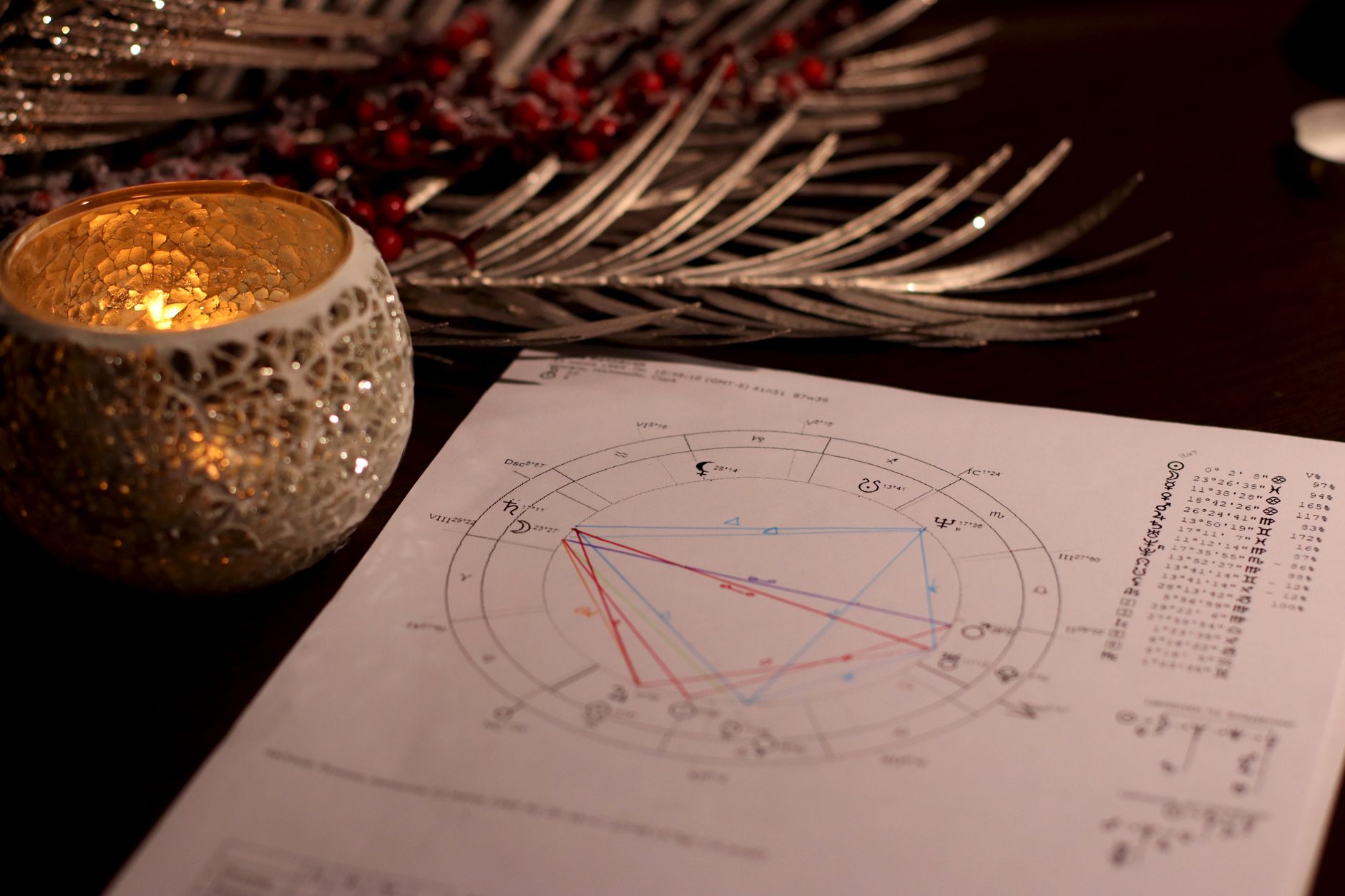
Western astrology, as I practice it with Aether and have studied for years, is geocentric, meaning it places Earth at the center of the celestial sphere. It uses a circular chart, your birth chart, divided into twelve zodiac signs and twelve houses, representing different areas of life. Each planet – from the Sun and Moon to Mercury, Venus, Mars, Jupiter, Saturn, Uranus, Neptune, and Pluto – represents a specific psychological function or life force. For example, your Sun sign speaks to your core identity and ego, while your Moon sign reveals your emotional nature and subconscious needs. The precise degree of each planet in a sign, and how they relate to each other through aspects (the angles they form), paints a detailed psychological portrait of your potential, challenges, and inner workings. We also consider the Ascendant, or rising sign, which is the zodiac sign that was ascending on the eastern horizon at the moment you were born, shaping your outward personality and how others perceive you. Aether's precise calculations, based on real orbital mechanics, allow us to pinpoint these positions with incredible accuracy, giving a truly personalized reading.
Chinese BaZi, on the other hand, is rooted in the principles of the Chinese calendar and the five elements: Wood, Fire, Earth, Metal, and Water. It's not about planets orbiting the sun, but about the unique energy signature of the moment you were born, expressed through these elements. Your birth data – year, month, day, and hour – is converted into four pairs of characters, known as "pillars." Each pillar consists of a Heavenly Stem and an Earthly Branch, which are then further broken down into their elemental components. For instance, the year you were born might be a Yang Wood Dragon, where Wood is the dominant element and Dragon is the Earthly Branch, carrying its own elemental blend. These elemental interactions within your four pillars reveal your inherent talents, personality traits, relationships, and even potential health predispositions. It's a system deeply intertwined with Taoist philosophy and the flow of Qi, or life force energy.
How They Reveal Your Story
Both systems aim to provide insight, but they do so through different lenses. Western astrology often emphasizes psychological traits, motivations, and life themes. When I look at a birth chart, I'm looking for patterns that describe *who you are* and *why you do what you do*. For example, someone with a strong Aries influence – meaning Aries is prominent in their chart, perhaps as their Sun sign or Ascendant – might be naturally assertive, pioneering, and energetic. We look at transits, which are where the planets are currently in the sky, and how they interact with your birth chart, to understand current opportunities and challenges. If Saturn, the planet of discipline and responsibility, is currently forming a challenging angle to your natal Sun, you might be experiencing a period where you're asked to take on more duties or face important life lessons.
BaZi, while also revealing personality, tends to focus more on the *flow of luck* and *life circumstances* over time. It's less about the "why" and more about the "what" and "when." A BaZi reading will analyze the balance of the five elements in your chart. If, for example, your chart has an abundance of Fire but is weak in Water, a BaZi practitioner might suggest ways to introduce more Water energy into your life to create balance – perhaps through colors, activities, or even career choices. BaZi also uses "luck cycles" (periods of ten years) to predict general trends and potential opportunities or obstacles in different phases of your life. It's a fascinating system for understanding the ebb and flow of fortune and how to best align yourself with cosmic energies.
A Shared Purpose: Self-Awareness
Despite their distinct methodologies and symbolic languages, both Western astrology and Chinese BaZi share a profound common goal: to foster self-awareness and empower individuals. Neither system dictates your destiny; rather, they illuminate your inherent potential and the energetic landscape you navigate. Knowing your birth chart or your Four Pillars isn't about being told what will happen, but about understanding your strengths, recognizing your weaknesses, and making informed choices that align with your true nature.
For instance, if your Western chart shows a strong Mars, the planet of action and drive, in a creative sign like Leo, you might be naturally drawn to leadership roles in artistic fields. A BaZi chart, on the other hand, might reveal a strong Wood element, which is associated with growth, creativity, and ambition, pointing to a similar path. The beauty is that these systems, while different, often echo similar truths about an individual, offering complementary perspectives. Whether you're drawn to the planetary dance of Western astrology or the elemental flow of BaZi, both offer powerful tools for navigating your life's journey with greater clarity and purpose.
Frequently Asked Questions
Can Western Astrology and Chinese BaZi be used together?
Absolutely! Many people find that exploring both systems offers a more comprehensive and nuanced understanding of themselves. While their methodologies are different, they often highlight similar themes or potentials in a person's life, providing complementary insights rather than contradictory ones.
Do I need my exact birth time for both systems?
Yes, for Western astrology, your exact birth time (to the minute, if possible) and location are crucial for calculating your Ascendant (rising sign) and the precise positions of the planets in the houses, which significantly impact the accuracy of your birth chart. For Chinese BaZi, the exact hour of birth is also very important, as it forms the fourth pillar and can dramatically change the elemental balance of your chart.
Which system is "better" or more accurate?
Neither system is inherently "better" or more accurate; they are simply different frameworks for understanding life and personality. The "best" system is often the one that resonates most deeply with you personally and provides the most useful insights for your self-discovery journey. Both have been refined over millennia and have proven their value to countless individuals.