Secondary Progressions: Your Evolving Birth Chart
By Camilla · September 16, 2026
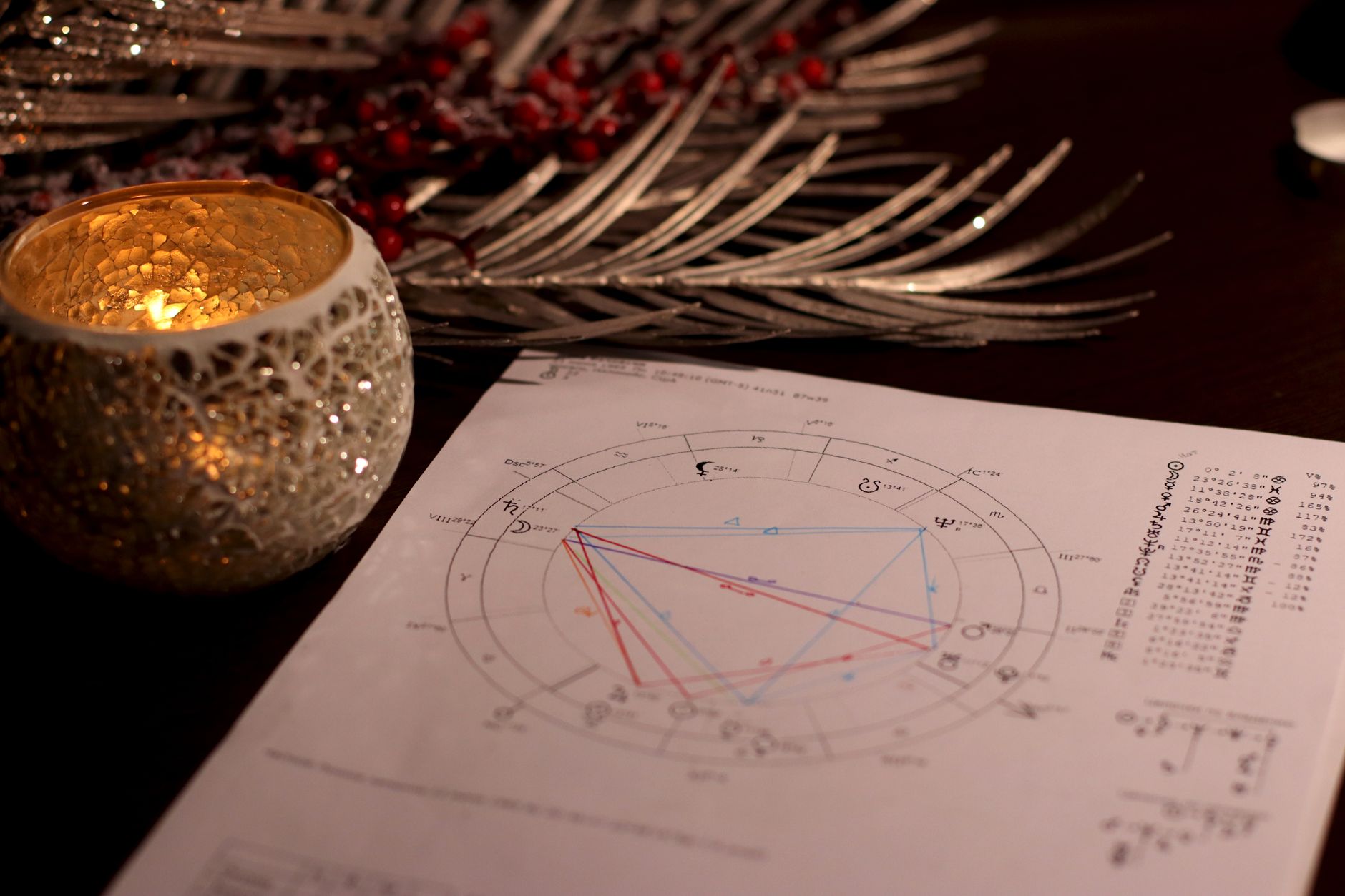
Secondary Progressions are a symbolic way of moving your birth chart forward in time, where each day after your birth represents a year of your life, showing how your inner self and potential unfold over time. It's like taking a snapshot of the sky the day you were born and then watching it subtly shift, day by day, to reflect the larger, slower changes happening within you over the years.
How Secondary Progressions Work Their Magic
Imagine your birth chart as a seed planted the moment you were born. Secondary Progressions are the process of watching that seed grow into a plant, then a tree, showing its natural development. The core idea is simple: for every year of your life, we look at the positions of the planets one day after your birth. So, if you're 30 years old, we'd look at the planetary positions 30 days after your birth date. This isn't about what's happening in the sky *right now* (those are called transits), but rather a unique, personal clock that reflects your internal evolution.
The planets move at different speeds, of course. The Moon, for instance, moves about one degree a day, which means it changes zodiac signs every two to three years in your progressed chart. This "progressed Moon" is incredibly insightful for understanding your emotional shifts, your changing needs, and the general emotional climate of different periods of your life. When your progressed Moon moves into a new sign, you might notice a shift in what feels emotionally important to you, or how you express your feelings. For example, if your progressed Moon moves from the nurturing, home-focused sign of Cancer into the dramatic, self-expressive sign of Leo, you might find yourself wanting more attention, seeking creative outlets, or feeling a stronger urge to be seen and appreciated for who you are.
The Sun, representing your core identity and life purpose, moves about one degree a year in your progressed chart. This means it takes roughly 30 years for your progressed Sun to move through one zodiac sign. When your progressed Sun changes signs, it signifies a profound, long-term shift in your fundamental identity, your life's direction, and what truly energizes you. It’s a major turning point, often marking the beginning of a new chapter where your core motivations and sense of self are redefined. Aether calculates these precise planetary movements based on their actual orbital mechanics, rather than simplified tables, ensuring the most accurate reflection of these subtle shifts.
Why These Inner Shifts Matter
Secondary Progressions are less about external events and more about your internal landscape – your developing personality, your evolving desires, and your changing psychological needs. While transits (the current positions of the planets) often correlate with external happenings, progressions speak to your inner growth and readiness for certain experiences. Think of it this way: a transit might bring an opportunity to your door, but your progressed chart shows whether you're internally prepared to open that door and walk through it.
For instance, if your progressed Venus – the planet of love, values, and relationships – moves into a new sign, you might notice a shift in what you value in relationships, what kind of beauty attracts you, or how you express affection. If your progressed Mars – the planet of action, drive, and assertion – changes signs, you might find your energy directed differently, or your approach to pursuing goals transforming. These are not sudden changes, but rather a gradual unfolding, a deepening of self-awareness over time.
Understanding your Secondary Progressions can offer immense clarity during periods of transition or self-discovery. If you're feeling a profound shift in your interests or a deep internal pull towards something new, your progressed chart can often illuminate the astrological timing of this inner transformation. It helps you understand that these feelings aren't random but part of a natural, unfolding process within your own unique cosmic blueprint. It can be incredibly validating to see these internal shifts reflected in the symbolic movements of your progressed planets, helping you to lean into your evolving self with greater confidence and understanding.
A Real Example of Progressed Planets
Let's consider a hypothetical example: someone whose progressed Moon has just entered their 10th house – the area of the chart associated with career, public image, and life direction. For the past two to three years, while their progressed Moon was in their 9th house (related to higher learning, travel, and philosophy), they might have felt a strong urge to explore new ideas, perhaps even going back to school or traveling extensively. Now, with the progressed Moon moving into the 10th house, they might suddenly feel a powerful emotional drive to focus on their career, to gain recognition, or to establish a more public role. This isn't necessarily about a new job landing in their lap (though a transit might bring that), but rather an internal shift where their emotional energy and focus naturally gravitate towards their professional aspirations and how they are perceived in the world. They might feel more ambitious, more driven to achieve, and more sensitive to their public reputation.
Similarly, if someone's progressed Mercury – the planet of communication and thinking – changes signs from, say, the meticulous and analytical sign of Virgo to the balanced and relationship-oriented sign of Libra, they might notice a shift in their communication style. They might become more focused on fairness and diplomacy in their conversations, perhaps less critical and more eager to find common ground. Their thought processes might also become more geared towards understanding different perspectives and seeking harmony in their intellectual pursuits. These shifts are subtle but powerful, guiding your internal growth and shaping how you interact with the world around you over the long term.
Frequently Asked Questions
What's the difference between Secondary Progressions and Transits?
Transits refer to the actual, current positions of the planets in the sky and how they interact with your birth chart, often correlating with external events and opportunities. Secondary Progressions, on the other hand, are a symbolic movement of your birth chart forward in time (where each day after birth equals a year of life), primarily reflecting your internal growth, psychological development, and evolving inner landscape.
How often do progressed planets change signs?
It varies greatly by planet. The progressed Moon changes signs roughly every 2 to 3 years, indicating shifts in emotional focus. The progressed Sun changes signs about every 30 years, marking major shifts in core identity and life purpose. Slower-moving planets like Jupiter or Saturn might not change signs in your progressed chart over an entire lifetime, reflecting very long-term, foundational themes.
Can Secondary Progressions predict specific events?
While Secondary Progressions primarily indicate internal readiness and shifts in your psychological state, they can sometimes coincide with significant life events. However, they are more about *why* you're ready for an event or *how* you're internally processing it, rather than predicting the event itself. For event timing, astrologers often look at transits in combination with progressions.