Synastry: Understanding How Your Birth Charts Connect
By Camilla · September 7, 2026
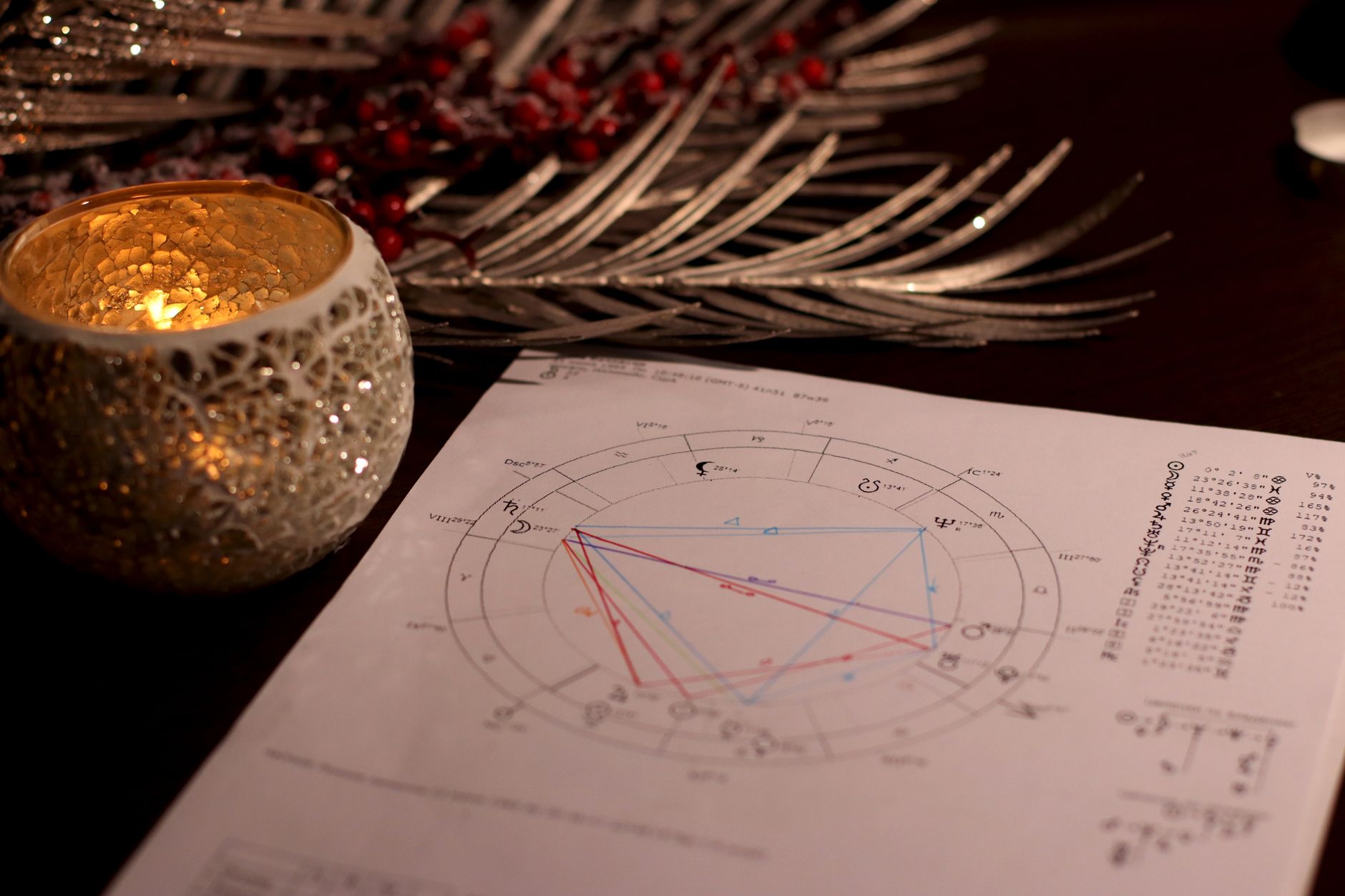
Synastry is a fascinating branch of astrology that compares two or more individual birth charts to understand the dynamics, potential, and challenges of a relationship. It's like laying two intricate maps over each other to see where their paths align, where they diverge, and what kind of journey they might embark on together. Rather than just looking at what makes each person unique, synastry focuses on the interplay between them, revealing how one person's planetary energies activate or respond to another's. It's a truly beautiful way to gain insight into all kinds of connections – romantic, familial, friendships, or even professional partnerships.
What Synastry Reveals About Relationships
When we look at synastry, we're essentially examining how the planets in one person's birth chart (which is a snapshot of the sky at the exact moment they were born) interact with the planets in another person's chart. For example, if one person's Sun (representing their core identity) falls into another person's 7th House (the area of the chart associated with partnerships), it might suggest that the first person's very essence feels deeply recognized and valued within the relationship. Or, if one person's Mars (the planet of drive and action) makes a challenging angle to another person's Venus (the planet of love and harmony), it could point to areas where their desires or ways of expressing affection might clash, requiring more conscious effort to understand each other.
It's not about predicting a relationship's "success" or "failure," but rather about illuminating its underlying energetic blueprint. Think of it as a guide to understanding the natural currents and tides within a connection. Knowing these dynamics can empower individuals to navigate their relationships with greater awareness and empathy. For instance, if synastry shows a strong connection between one person's Mercury (how they communicate) and another person's Moon (their emotional core), it suggests a natural ease in talking about feelings, fostering deep emotional understanding. Conversely, if there are many challenging interactions, it doesn't mean the relationship is doomed; instead, it highlights specific areas that might require more patience, compromise, and open communication to flourish. Aether's precise calculations, based on actual planetary positions at birth, allow for incredibly accurate comparisons, far beyond simplified sun sign compatibility.
How Astrologers Interpret Synastry
When an astrologer interprets synastry, they look at several key components. First, they examine the *aspects* – the specific angles or distances between planets in one person's chart and planets in another's. For example, a *conjunction* (when two planets are very close together) between one person's Moon and another's Sun often indicates a deep sense of emotional understanding and mutual recognition. A *trine* (a harmonious 120-degree angle) between Venus and Mars in synastry can point to natural chemistry and a balanced flow of affection and passion. On the other hand, *squares* (challenging 90-degree angles) or *oppositions* (180-degree angles) can highlight areas of tension or friction that, while sometimes difficult, can also be powerful catalysts for growth if approached consciously.
Beyond just the planetary interactions, astrologers also consider *house overlays*. This is where a planet from one person's chart falls into a specific house (an area of life like relationships, career, or home) in the other person's chart. If your partner's Jupiter (the planet of expansion and good fortune) falls into your 10th House (the area of career and public image), they might be a great source of encouragement and opportunity for your professional life. Or, if their Saturn (the planet of structure and responsibility) falls into your 4th House (the area of home and family), they might bring a sense of stability and commitment to your domestic life, but perhaps also some serious expectations. It's a rich, multi-layered analysis that paints a detailed picture of how two individuals intertwine.
Why Synastry Matters for Self-Awareness
Synastry isn't just about understanding the other person; it's profoundly about understanding *yourself* in the context of your relationships. Often, we find ourselves in patterns or dynamics with others without fully grasping why. Synastry can offer incredibly clarifying insights into these experiences. For instance, if you consistently find yourself feeling overly responsible in relationships, synastry might reveal that your Saturn (the planet of responsibility and boundaries) is frequently making challenging connections to your partners' personal planets, highlighting a recurring theme in your relational life.
It can also explain why certain people just "get" you, while others seem to constantly misunderstand your intentions. The harmonious *aspects* (the angles between planets) in synastry can show where there's natural resonance and ease, while the more challenging ones pinpoint areas where you might need to adjust your approach or simply accept differences. It’s a tool for compassion, both for yourself and for others. By understanding the astrological blueprint of your connections, you can approach them with greater intentionality, whether that means celebrating your shared strengths, working through challenges with more patience, or simply appreciating the unique lessons each relationship brings into your life. It truly helps us see that every connection, no matter how brief or long-lasting, is a mirror reflecting aspects of ourselves.
Frequently Asked Questions
Can synastry predict if a relationship will last?
No, synastry does not predict the longevity or "success" of a relationship. Instead, it illuminates the inherent dynamics, strengths, and challenges within a connection, offering insights into how two individuals might interact and grow together.
Is synastry only for romantic relationships?
Not at all! While often used for romantic partners, synastry can be applied to any type of relationship: friendships, family members, business partners, or even understanding the dynamics between a parent and child.
Do I need both people's exact birth times for synastry?
Having the exact birth time for both individuals is ideal, as it allows for the precise calculation of the Ascendant (the sign rising on the eastern horizon at birth) and the house placements, which are crucial for a detailed synastry reading. However, a general understanding can still be gained with just birth dates and locations, though it will be less specific.